Every few years, most of us get handed the same assignment in a new disguise. The words change, but the shape is always familiar: “We need you to join this project. It is already running. The previous person just left. Can you get up to speed quickly and take ownership?” It does not matter whether you are an architect, a developer, a tester, a database administrator, a DevOps engineer, a support executive, a business analyst, a product owner, or a project manager. The assignment is the same. Jump onto a moving train, learn the route, befriend the passengers, and eventually…

-
-
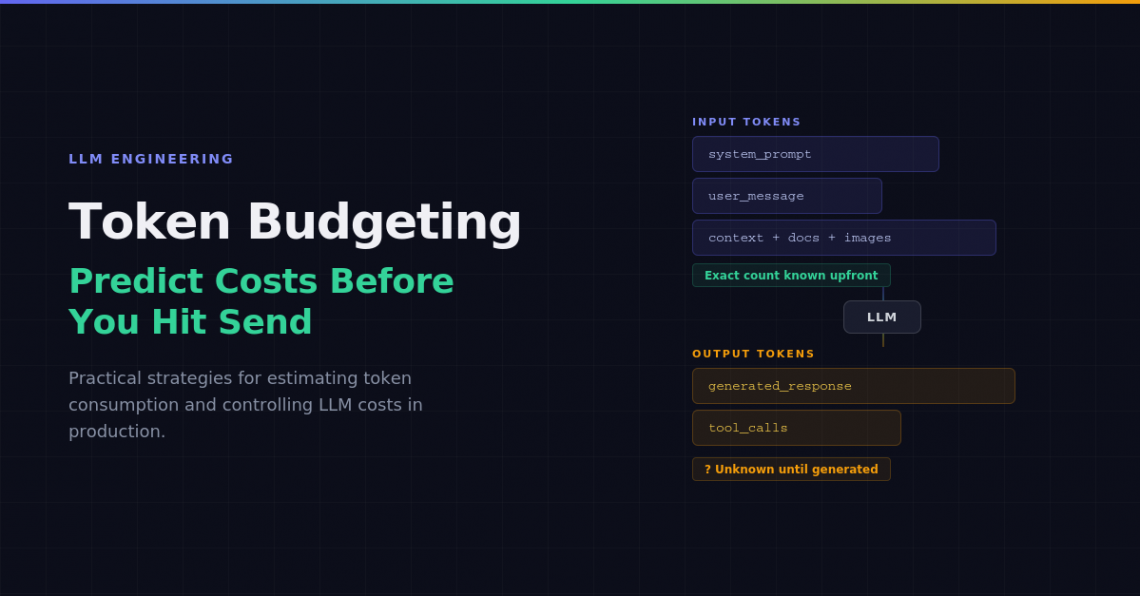
Token estimation is not a solved problem, but it is a much more manageable problem than most teams realize. This article breaks down the practical strategies for projecting token usage before your prompts ever reach the model. Read my new AI Architecture article here – https://www.linkedin.com/pulse/token-budgeting-predicting-llm-costs-before-you-hit-send-praveen-nair-ovo0c
-
Similarities Aspect Core idea Delegate multi-step tasks to AI — it plans, executes, checks in, and delivers AI engine Both use Claude as the underlying model and share the same “agentic harness” — the system that allows the AI to use tools and the guardrails around how it functions Human-in-loop Both show you a plan before acting, require approvals for significant actions, and let you redirect mid-task Background execution Tasks run asynchronously — you can step away and come back to completed work MCP standard Both use the Model Context Protocol for connecting to external tools Status Both currently in…
-
Read my new article “Context Window explained” in LinkedIn – https://www.linkedin.com/pulse/context-window-explained-praveen-nair-yif9c
-
In the past, the tech world was obsessed with the raw potential of artificial intelligence. Today, the conversation has moved entirely to verifiable integrations, strict governance, and clear returns on investment. Building a massive system is only half the battle. The other half is proving the system is secure, compliant, and financially viable for the business. Let us explore the core views that shape how large scale systems are built and validated in the real world. Read full article: https://www.linkedin.com/pulse/architecting-enterprise-ai-reality-blueprint-integration-praveen-nair-72sdc
-
I recently worked on an AI project that was quite unusual. It was about analyzing the past, present, and future of a person’s life. Yes, you guessed it right. Astrology. More specifically, this project focused on Vedic Astrology using the Kerala system. As someone who builds AI systems for a living, and being someone who loves solving challenging problems, I was excited. Modern AI tools make it incredibly easy to spin up apps quickly. But here is the reality check. The whole concept of “vibe coding” is still evolving, especially when it comes to complex data analysis, probabilistic workflows, and…
-
AI agents are often described as autonomous, adaptive, and intelligent. This can create the impression that they automatically learn from every interaction and continuously improve on their own. In reality, most AI agents do not learn automatically. They must be explicitly designed, configured, or programmed to learn. Understanding this distinction is critical when building real-world AI systems. Key Takeaways: Contrary to popular belief, AI agents do not automatically learn from interactions. Once deployed, their internal models are “frozen” unless explicitly engineered otherwise. An agent remembering your name or past context is simply data retrieval (eg. RAG), not learning. True learning…
-
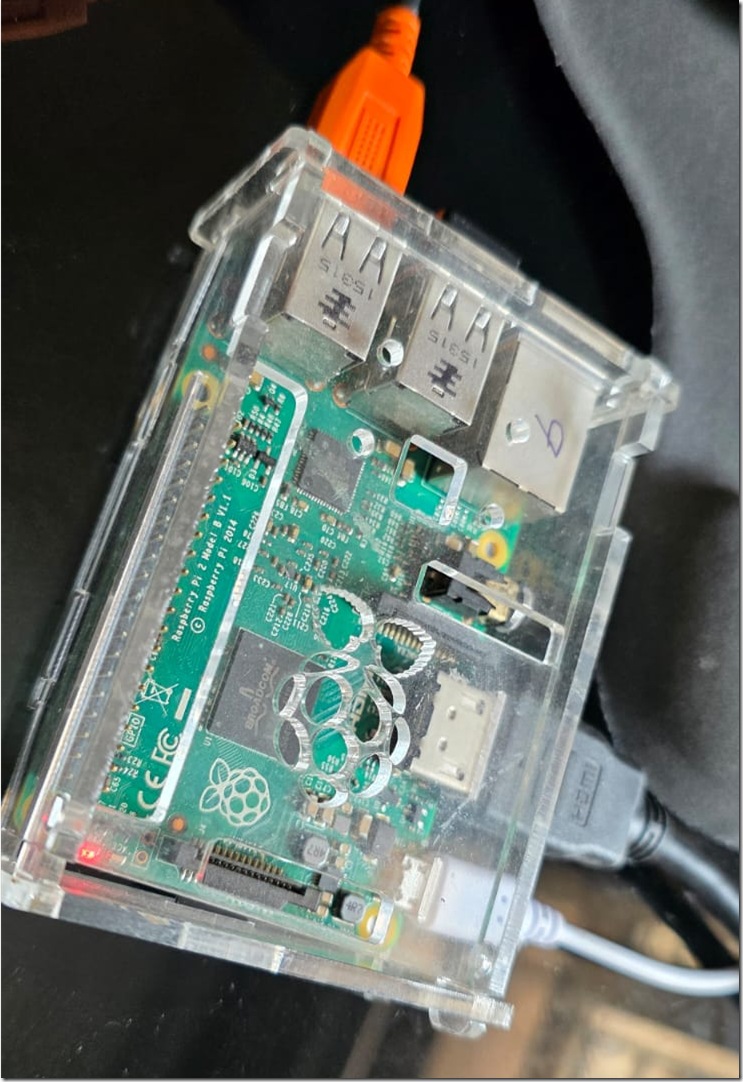
This article is a write up of my experience on hosting Qwen 2.5 the 0.5B model in Raspberry Pi 2 using Llama.cpp. Qwen 2.5 is one of the small SLM with 0.5B parameters so a small development board like Raspberry Pi can hold it. RPi 2 Model B comes with 900Mhz speed and only 1GB of memory. But to be honest, setting up the project might take 1-2 hours, and the prompt execution is only some 1-2 tokens per second. So you need to be patient. Let us begin! Step 0: Pick up the Raspberry Pi 2 from the attic.…
-
Takeaways Read the Whitepaper here: https://www.linkedin.com/posts/ninethsense_the-deterministic-ai-agent-a-dual-brain-activity-7402527472975568896-xW1k?utm_source=share&utm_medium=member_desktop&rcm=ACoAAAEqPm8Bief48CxwsnTrzIyprD5rdLx_zjU
-
How should a technical leader respond when a customer asks to add AI to an existing application? The answer requires structure and clear thinking. 1. First, clarify the Actual ProblemNever assume that AI is the right solution. I would start by understanding the business objective. Many requests framed as AI needs turn out to be workflow issues, reporting gaps, or rule based automation opportunities. Accurate problem definition prevents unnecessary complexity. 2. Evaluate Data/App ReadinessAI depends completely on data quality. Assess what data exists, how clean it is, and whether privacy or compliance concerns limit its use. If data foundations are…