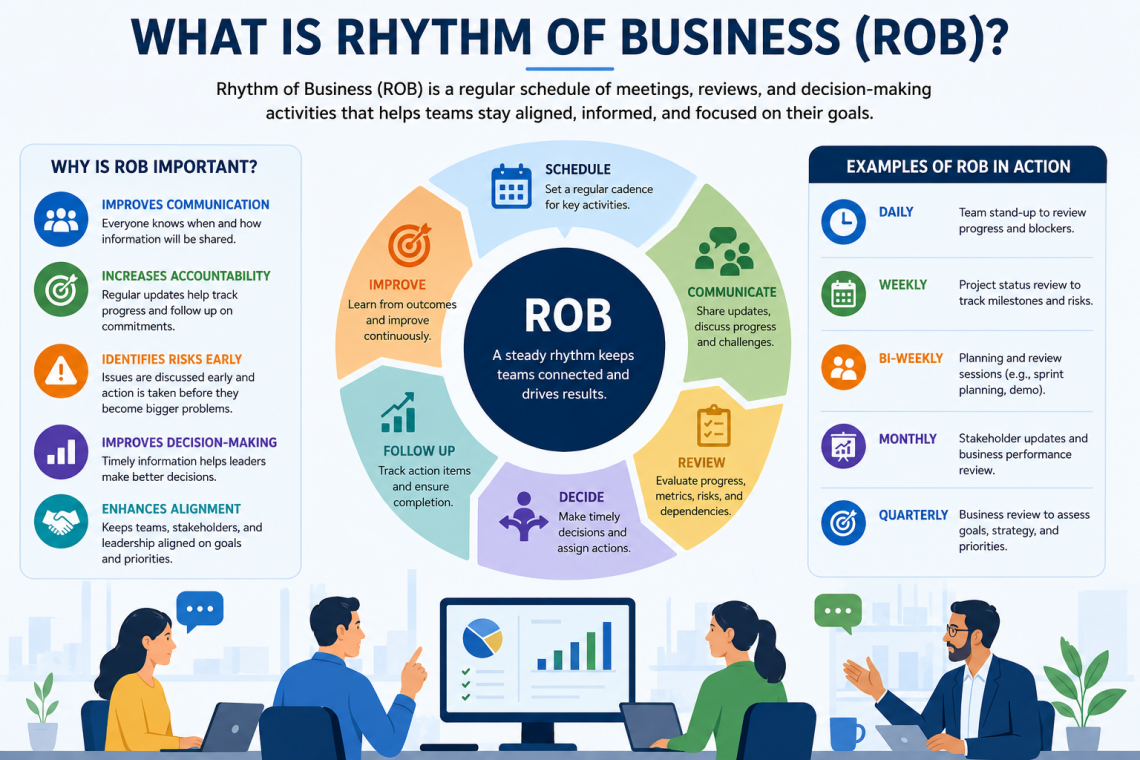
Every successful project or business depends on good planning, regular communication, and timely decisions. Whether it is developing a software application, launching a new product, or managing day-to-day business operations, teams need a structured way to stay aligned.
This is where Rhythm of Business aka ROB comes into the picture.
Rhythm of Business is a regular schedule of meetings, reviews, and decision-making activities that helps teams work together effectively. Instead of conducting meetings only when problems arise, organizations follow a planned routine to review progress, discuss challenges, and make decisions.
Note that, ROB is commonly used in enterprise project and program management, though it is not a formal term in frameworks like PMBOK or PRINCE2.
A well-defined ROB creates consistency and helps teams stay focused on their goals.
What is Rhythm of Business?
Rhythm of Business, commonly known as ROB, is a structured cycle of recurring activities that keeps a project, team, or organization moving in the right direction. These activities may include daily team meetings, weekly status reviews, monthly leadership meetings, and quarterly business reviews. Each meeting has a specific purpose and follows a regular schedule.
ROB is not just about meetings. It is about creating a predictable way for people to communicate, solve problems, review performance, and make decisions.
Why is ROB Important?
As organizations grow, teams become larger and projects become more complex. Different departments often depend on one another to complete their work. Without regular communication, misunderstandings and delays can easily occur. A good Rhythm of Business helps everyone stay informed. Team members know when progress will be reviewed, when decisions will be made, and when they can raise concerns. ROB also helps identify risks early. Instead of discovering problems at the end of a project, teams can discuss issues during regular review meetings and take corrective action.
Another important benefit is better transparency. Business leaders and stakeholders receive regular updates and can provide feedback before small issues become major problems.
Where is ROB Used?
ROB is used across many business functions. Project managers use it to monitor schedules, budgets, and risks. Product teams use it to review feature development and customer feedback. IT operations teams use it to monitor system performance and service availability. Business leaders use ROB to review goals, performance, and strategic priorities.
In application development projects, ROB includes activities such as daily stand-up meetings, sprint planning sessions, weekly project reviews, and release readiness meetings. These recurring activities help development teams deliver software in an organized and predictable manner.
Although the activities and meeting names may differ, the purpose of ROB remains the same across all teams: maintaining communication, visibility, and accountability.
Common ROB Activities
Every organization designs its own Rhythm of Business based on its needs. However, some activities are commonly seen in many teams.
- Daily meetings help team members share progress and discuss blockers
- Weekly review meetings focus on project status, risks, and upcoming work
- Monthly meetings provide updates to business stakeholders and leadership
- Quarterly reviews help organizations measure progress against long-term goals and adjust their plans if necessary.
Having a regular schedule makes communication more effective and reduces the need for unplanned meetings.
Benefits of ROB
A well-planned Rhythm of Business provides several benefits.
- It improves communication by ensuring that important discussions happen regularly
- It increases accountability because team members review progress and follow up on action items
- It helps organizations detect risks early and solve problems before they affect business outcomes
- ROB also improves collaboration between technical teams, business users, and leadership. Since everyone receives regular updates, decisions can be made faster and with better information
Perhaps the greatest benefit is predictability. Teams know what meetings will occur, what information needs to be prepared, and when important decisions are expected.
Best Practices
An effective ROB should be simple and practical. Every recurring meeting should have a clear objective and a planned agenda. Only people who are directly involved should participate. Meetings should end with clear action items and assigned responsibilities.
Organizations should also review their ROB from time to time. Meetings that no longer provide value should be modified or removed. The purpose of ROB is to improve productivity, not to increase the number of meetings.